Category: Articulation
Showing posts with label Articulation. Show all posts

USING TOKENS IN SPEECH THERAPY

Saturday, February 16, 2019 3 comments


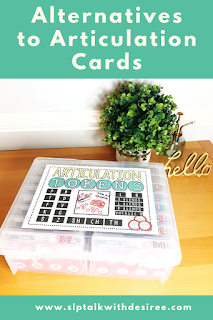
You know how you walk down the aisle of a store and think to yourself, 'I could use that in my speech therapy room'? Well, that's how I started using tokens in my therapy room. Nearly two decades ago, I was walking through an SLPs home away from home, a dollar store. I spotted sleeves of plastic poker chips and they somehow jumped into my cart.

At the time, I was working with a preschool and early intervention caseload. I grabbed some modge podge and my trusty Boardmaker to add visuals. They worked beautifully to keep the kids engaged with a learning tool that they perceived as a toy.


Many years later, I've updated the graphics and vocabulary that I use but the concept remains the same. I've used poker chips I've found at the thrift store, glass gems from the dollar store, wooden discs from Amazon, and plastic bottle caps. Now, to ease the process, I print my images on full sheet label paper and simply stick them on. Works like a charm.


Here are some of the ways that I have used Articulation Tokens:

  • Use tokens in sensory Boxes
  • Hide & Seek
  • Incorporate with spatial concepts
  • Use in play based therapy as manipulatives with toys (ex. tokens ride on pirate ship)
  • Create a game board
  • Feed a puppet
  • Stack
  • Deposit into piggy bank
  • Fill token companion letter
  • Use in silly fill-in-the-blank stories
  • Place on pictures within a storybook
  • Use in a speech relay race
  • Balance on a spatula and deposit in a bucket across the room
  • Hot potato (say target sound when passed to you)
  • Use in a lending library for RtI (paired with data sheets)
  • Use printable shrink paper, cut out and place in the oven to create your tokens
  • Use black & white stickers on crafts
  • Cut a row of token strips to form into bracelet
  • Print as smash mats
  • Print black & white pages of the labels to use with paint dab markers


If you are interested in introducing Articulation Tokens to your speech therapy sessions, I've done some of the legwork for you. This Articulation Tokens Bundle contains token templates, data sheets, storage labels and token companion letters. I hope that they bring as much joy and engagement to your sessions as they have to mine! 

Articulation Tokens


FREE Escape the Speech Room - ARTICULATION CHALLENGE

Tuesday, July 17, 2018 No comments


I love how hands on activities spark engagement in my therapy sessions. Don't get me wrong, I don't go big in every session but when I do, I often find that as engagement goes up, behavior management goes down. I love how escape challenges facilitate cooperative learning (hello social skills) in a structured way as students work together to complete each mission. I couldn't resist taking the fun into my articulation sessions!


Mission One:

The first mission requires them to complete a 9 piece puzzle containing the target phoneme in the initial, medial and final position of words. They give you the flexibility to tailor expectations to your student's level of success (say each word 10x, identify the position within the word, auditory bombardment paired with sound in isolation, etc.). Once they complete the puzzle, the remaining three pieces will determine the first lock code. (Total puzzle pieces: 12)


Mission Two:

In the second mission, the students use the decoder ring to decipher the lock code by spelling it out. Each letter of the alphabet is represented on the decoder ring with a picture containing the target phoneme in either the initial, medial or final position of the word. You may also choose to use the decoder ring for additional therapy activities outside of the Escape the Speech Room Challenge. For example, students could spell their name using the target pictures, spelling/vocabulary words, etc.


Mission Three:
The third mission includes sentences containing words with the target phoneme. Students determine if the statements are TRUE or FALSE to color a grid which will reveal the third lock code. This mission encourages students to practice the target sound at the sentence level. Two different lock codes are provided for this mission for you to choose from.

When the students unlock all three locks, they can then open the toolbox to discover "I Escaped the Speech Room" brag tags (included) or a prize of your choice (not included). 

Materials you will need to purchase separately:
⇨ 3 Three Digit Combination Locks 
(Locks that you can program work best. Links are included for the ones pictured).
⇨ HASP - Allows all three locks to be attached to one toolbox. 
If you prefer, you can add holes to your toolbox or use separate toolboxes.
⇨ Toolbox or container to attach locks to.
I purchased the one that I use at the dollar tree.

★ Lock codes are consistent for each Escape Room Challenge to alleviate the prep of reprogramming locks between groups/phonemes. It also allows missions to be used interchangeably within mixed groups. For example, you may choose to use a different phoneme for each mission.
★ If you prefer to set your own lock codes, an option for you to customize is included. This is not digitally editable but allows you to customize printed missions.


If you would like to try more Escape the Speech Room Challenges, you can find more Articulation Challenges here.


I would love to hear what activities your students love! If you try an Escape Room Challenge, let me know how it goes!

P.S. If you are looking for an Escape Room Challenge to teach all about SLP, you may also want to read about one I used for my son's career day in this post.

SLP Valentine's Day Hop

Saturday, February 3, 2018 No comments
It's time to add five more FREEBIES to your collection! 

Frankie's back with some Valentine treats! We sang our way through Halloween with the #SLPHalloweenHop and jingled our way through the #SLPChristmasHop so it only seemed fair to add some more love to your collection with the #SLPValentineHop.

 SLP Valentine Hop

To collect your collaborative freebies, that's right they work together, search #SLPValentineHop on Teachers Pay Teachers or click on the links below!

The Pedi Speechie starts us off with a Frankie song book, sung to the tune of Wheels on the Bus.


Sparklle SLP added story and song visuals for sequencing, smash mats, a game board and sentence flips! Wow! 

Sparklle SLP Valentine's Day Hop Freebie

Speech Wonderland adds Category goodies and blank Valentine's Day cards. Her freebie includes a colorful categories booklet, categories game board, heart category match and blank Valentine's Day cards!

 Speech Wonderland Valentine's Day Hop Freebie

Wait, there's more!! Speech Owl adds phonemic awareness activities that are simply adorable.

 Speech Owl Valentine's Day Hop Freebie

Finally, hop on over to SLPTalk with Desiree, where I added a Wh- Questions activity to the mix with another interactive Wh- Questions board.

SLPTalk Valentine's Day Hop Freebie


We hope that you enjoy all of the Valentine's Day fun that Frankie brings to your speech therapy sessions! 

Hoppy Valentine's Day!

P.S. If you missed out on the #SLPHalloweenHop or #SLPChristmasHop, you can still find them by searching on Teachers Pay Teachers. 


SLP CHRISTMAS HOP: Fill your Therapy Bag with Free Holiday Materials!

Tuesday, December 12, 2017 No comments
The winter break countdown is on. SLPs everywhere are the busiest elves I know, delivering evals and IEPs wherever they go. I don't know about you, but my typing fingers are on overdrive trying to get it all done. 


This is where some of my SLP blogging buddies and I step in to help you out with some free speech therapy materials to spread holiday speech therapy cheer through a collaborative freebie hop. Simply download these 7 freebies and you will have one large Christmas themed speech therapy packet to meet many of your students' needs! I love having all of these awesome materials at my fingertips for my mixed groups! 

Oh yeah, did I mention that they are literacy based? SLP swoon. Yup, my friend The Pedi Speechie came up with another innovative Frankie story to the tune of Rudolph the Red Nosed Reindeer as the anchor to the therapy activities. 

I chime in with WH questions that you can use as is or attach to clothespins for students to attach to answers displayed around the wreath. I love to throw them in a sensory bin along with some plastic frogs.


When you download the WH Questions Freebie, you will also find links to the coordinating freebies from these fab SLPs:

The Pedi Speech starts us off with her Holiday Hop story featuring our favorite frog Frankie
Speech Wonderland gifted some Category Treats 
The Speech Owl provided Phonemic Awareness activities
Speechasaurus provided Articulation Chains
The Speech Attic provided activities targeting Basic Concepts
Sparklle SLP includes Story Visuals and Reinforcements (like smash mats!)

I hope that these freebies fill you SLP Santa sack with fun to carry you through to Winter Break. 
You can make it!


Got Goals? Increasing Student Accountability & Goal Awareness

Saturday, August 19, 2017 No comments
One of my biggest pet peeves is when students do not know why they come to speech therapy. "To play games" just doesn't cut it in my book. Do we ever play games in my room? Absolutely. Not every session, but it does happen. However, that game is a medium to address the specific goals, not the goal itself. Now, I know that you all know that so you're probably thinking I'm preaching to the choir, right? My point is that WE know what the purpose of that game or activity is but do our students?


Having students know what they target in speech-language has always been an important factor for me but a couple years ago I had to take a good hard look at HOW I was doing that. As a token of congratulations for being nominated educator of the year, my sweet SLP colleague compiled a book for me with responses from my students about what they love about coming to speech. The responses truly touched my heart (I may have shed a tear or twenty) but responses that referenced the WHY they came to speech were in the minority. I am a big proponent of self-reflection so I had to take a step back and really think about what I could do to make sure that was in the forefront of their thinking about speech. My challenge? It was important to me to address that in a way that would not sacrifice the strong interpersonal relationships with my students that I hold near and dear to my heart. 

Flash forward to the next year... our SLP assignments were changed and I was now tasked to ensure that my self-reflection of increasing goal awareness took place while also establishing authentic relationships with new students. The solution that worked for me was using Speech Therapy Goal Tags. I'll be honest here... they weren't just helpful for my students but for me as well! Not only were my students learning what their speech therapy targets were, but I was learning what their specific targets were. Particularly for my students targeting language skills, this can be a difficult task.

What I didn't anticipate was how much the students would LOVE the tags. I intentionally made the goal tags in landscape orientation so they would be easy to discern from brag tags that we added. To the students, the tags were regarded as an ID badge. I included a schedule badge to encourage students to come down to therapy independently at their scheduled time. I had to hide my giggles when I would spot a student testing out their badge to see if it would gain them access to the elevator like staff badges do. 

How did they work?

Students were active participants in assembling their goal badges onto their lanyards. This was a great opportunity to talk about what they were working on in speech in a relevant project based manner that held relevance. The badges then traveled with students back and forth from class. They were also a helpful reminder to teachers about what each student was targeting in student friendly "I can" terms. Students took pride in them and would often ask for special permission to take them home and show their parents (ummm... absolutely!). 

I highly recommend trying it out to see how it works for you and your students. You can create your own tags with index cards/cardstock or use the Speech Therapy Goal Tags that I made if you want a print and go option. I added a customizable option as well so you can taylor them to meet your specific needs. 


What works for you? I'd love to hear. Shoot me a message or let me know in the comments below!

UPDATE: Do you want to hear more about using Goal Tags? Check them out in the video below!
(Don't mind the awkward screen shot... thanks YouTube!)

Functional Storage in My Speech Room

Thursday, July 27, 2017 15 comments


Speech Room Decor

I made a bit more progress on my speech room makeover today by repurposing a display for eyeglasses. I love that it rotates and provides functional decor for my room!

I switched out the existing display with white pegboard that I purchased at Home Depot. They cut it to the exact size that I needed. To go along with my rustic style, I used plastic flower pots from Home Depot that I glued twine onto. They were the perfect size for my needs. I attached chalkboard clothespins found at Michaels to label each flowerpot. That certainly wasn't necessary but having them match the style of my speech room just made me happy. 

Prior to my current display, I have used book bins or the top drawer of a rolling storage cart to store Articulation and Language Sticks. Their durability and having multiple targets on each paint stirrer make them an easy resource for me to grab and go in a pinch. 


Speech Room Makeover

Articulation Sticks are honestly a staple in my speech room. I love having over 1,000 stimulus words at my fingertips to target articulation while also introducing a variety of vocabulary concepts with picture supports. Working with a high risk, low socioeconomic and high ELL population, it is important that I maximize our activities to close that gap. 

Language sticks allow me to further differentiate student needs within mixed groups. Currently displayed are Category Sticks and Describing Sticks.  I am updating my Grammar Sticks so I can share them with you and add an updated version to my collection. If you are interested in learning more about how I use the sticks, you can check out the links below.


Language Sticks in Speech Therapy

Descriptive Language in Speech Therapy


Using articulation sticks in speech therapy


What tips do you have for organizing materials using functional decor in your classroom? I would love to hear!


Escape the Speech Room

Sunday, April 23, 2017 14 comments


I was recently invited to participate in a career fair at my son's elementary school. I was excited to participate and share my passion for speech-language pathology with them! I did not learn what speech-language pathology was until I was in college (gasp!) but am so thankful that I was blessed to be housed in the dorms across from a SLP major. Watching her creatively develop materials for her client in her clinical inspired me to take an introductory course to check out what speech-language pathology was all about. The rest is history!

In speaking with my son, one suggestion that he had was for the presentation to be interactive and engaging. I couldn't agree more so I decided to create an "Escape the Speech Room" activity that would introduce the students to various aspects of communication with missions in Articulation, Language, Fluency, Voice and Pragmatics! The students had a blast and they learned a bunch along the way! 


Knowing that the students would likely be listening to various presentations throughout the day, I wanted to give them the opportunity to get up and move while learning in the process.


Escape the Speech Room was broken up into 5 “missions” which were broken up into centers. Each of the 5 Missions reflected on an area within our scope of practice: Articulation, Language, Voice, Fluency, and Pragmatics.


Each mission contained a Debriefing Sheet with information about that particular area. It also included a list of materials that they needed as well as a description of their mission. Each mission uncovered a key to the help unlock the individual padlocks on the box. Once the groups solved their missions, they came together to learn about some of our work settings and decode the final clue. The individual padlocks all contained a card with a setting an SLP may work in. The students used those cards to collectively determine what the passcode to the final word lock was.


When the students completed their challenge, they filled out a Reflections sheet to show what they learned and share it with the other students. This allowed students to learn about the different centers or areas of speech-language pathology by reading their fellow classmates' reflections.


Does this sound like something that you would be interested in using in YOUR setting? Let me know what you think! {Update: If you missed the copy sent out in my newsletter, don't fret! Per your requests, I included it here in my Teachers Pay Teachers Store. Sign up for my newsletter if you would like to have first dibs and try out some new products for free.}


App Review: Leaping Leo

Sunday, February 19, 2017 No comments


Leaping Leo by Outloud is available for free in iTunes.  Leaping Leo is a voice activated application that uses the child's voice to control the avatar/photo to collect coins, navigate through a maze, jump over obstacles or avoid fire. The first 4 levels are offered for free with an in App purchase option for $3.99 to unlock the remaining levels. At the time of this review, there are 18 levels in all.


Before you play, you will need to calibrate the voice threshold. I chose 40 dB to reflect the noise level in a quite room. You can reference various noise levels on ASHA's website here. 
You can select which Profile picture will be hopping around through the scenes by choosing an animal, avatar or student photo.
Next, you will take your character through an adventure, controlling the character with your voice. The character may collect coins, look for treasure or navigate through a map.
Implications for speech therapy include encouraging students to use an appropriate volume of speech, reinforcing practice of targeted speech/language goals such as articulation targets or formulating sentences with targeted words. You can pair the app with targeted stimuli presented on Articulation Sticks or task cards. I found it to be a fun, motivating way to incorporate technology into the therapy session in a meaningful, rewarding way while targeting speech-language goals. You can find it here in the iTunes store.

Would you like to see Leaping Leo in action? You can check out my demonstration on Facebook Live here.

* A copy of Leaping Leo was provided to SLPTalk by Outloud. No other compensation was received. The opinions expressed in this review are my own.


Extending Activities Across Multiple Sessions

Monday, January 16, 2017 No comments


As speech language pathologists, we encourage teachers and parents to read the same book repeatedly, each time diving deeper into the plot, vocabulary, character analysis, inferencing what may happen next or alternate endings, etc. [Learn more about research that supports repeated book reading here]. Yet, when it comes to our own practice, we do not always apply the same principles. We may limit activities to one therapy session with a designated starting and end point. We do so with the best intentions. Not to mention that we have [crazy busy] schedules to adhere to. Hear me out though.... by changing our thinking we can actually save ourselves time in planning (gasp!) while helping our students dive deeper into the linguistic complexity of our materials and allowing them to access them from altering learning styles. 


Chances are you have a bunch of materials that you could adapt to this philosophy, digging a bit deeper each subsequent session, adapting to meet varying learning styles along the way. I am going to walk you through how I spread out an activity to go with 5 Little Penguins over several sessions, differentiating within mixed groups. As you are reading through, think how you can use your materials to extend across multiple sessions.


SESSION ONE:
Read, read, read. I used a simple story that I wrote about 5 Little Penguins Sitting on the Sled. You will likely recognize the predictable tune and format. In the book, the penguins perform various actions on the sled and then one inevitably falls off (poor little guy). I use this as an opportunity to REVIEW: Review what the student's goals are and determine how they are addressing them that day. Are they working on verb tenses, identifying words with their target sound, pacing, identifying pictured objects, identifying actions in pictures, sequencing, increasing MLU by filling in predictable words in the story, etc.  EXPLORE: What do you think this story will be about? What pictures do you see on the cover? What is same/different about the penguins? ADVENTURE: Every book opens up a new world to adventure. Engage in the adventure of learning as you read the book together. DIALOGUE: The format of predictable books naturally lends itself to student participation. Have students take turns acting out who is mama (or they can pretend it is papa penguin). Introduce new vocabulary. I work with a low SES population so introducing new vocabulary whenever I can is important. The last little penguin is surfing on the sled which led to a whole discussion (and a comical demonstration by yours truly) on what surfing is. The majority of this lesson played to my auditory and visual learners. Each student also took home their own mini book that they could read at home. While I recognize that you may not have a mini book of the book that you read, do you have a related stamp, sticker, paper bracelet, brag tag, etc. that you could offer your students to encourage them to talk about the story outside of the session?


SESSION TWO:
Play! What do you have that you can use to create a structured play environment that targets student goals? Do you have a sensory bin that you can set up with thematic items or task cards that review the story that you read last time? We used penguins that were differentiated by target goal to act out the story. The students had fun acting out the song with our penguins that displayed their "name" on the card. For example, "Kite fell off and bumped his head!" We used binder clips or clothes pins to make our penguins stand up on the sled and dramatically bump their heads as they fell off. It was a great opportunity to capture data at the word and sentence level for articulation goals and allowed for descriptive language practice as the green turtle or yellow sun penguins fell off. We were also able to interact targeting prepositional concepts (put the kite next to the key) and temporal concepts (the kite fell off before the key).  By allowing students to PRETEND, they LEARN how to incorporate their targeted skills into their play. Allow students to ACT out their own pretend play with the penguins. I learned how creative some of my students can be! Learning through play, makes your students YEARN for more! When students ask to bring the manipulative home (and they will, believe me) you  can assure them that they will get their own set as we move to session three...


SESSION THREE:
Make! Now truth be told, as fun as craftivities can be, they would likely make me pull my hair out if I did them every session. What I love about using craftivities when extending activities across sessions is that it feels more doable. The vocabulary has been introduced, we are simply interacting with it in a another way to make it more salient. MAXIMIZE: The penguin creativity rides on the coat tails of the last session's interactive play. Students follow directions as they color and cut out their penguins before gluing them onto folded index cards. AID: They now have their very own set of visual aids to KEEP for practice at home! I also included a quick parent note with a quick tip to EMPOWER them to help with home practice and keep the lines of communication open. One of my favorite things about a craftivity is that while I drill one student's goal, the other students have a productive activity to keep them busy learning.


SESSION FOUR:
STEAM based learning, while it is currently the big buzz word around town in the world of education, it really is intuitive for many of us as we often try to tie a hand-on learning approach to the curriculum to best serve our students. When I ask students, teachers and parents to describe a student's learning style, more often than not, the answer is either "hands-on" or "a combination of seeing, hearing and hands-on learning." A couple months ago, I let my students try their hand at a Candy Corn Challenge and they were hooked. I loved the language opportunities that were naturally embedded into the activity as we planned out the challenge, compared/contrasted outcomes, described our creations, etc. For the Penguin Sled Challenge, I wanted to provide an engaging language opportunity that also rewarded their hard work. Students have to earn their materials by working on their target goals (sneaky, sneaky I know...). For example, for every language task correctly complete or 5-10 correct articulation productions, the student will earn a popsicle stick. To take it a step further, students targeting articulation can generate their own target words, increasing phonological awareness, and then write the word on their popsicle stick. Once a student earns their materials, he/she will complete the challenge to build a sled (using popsicle sticks and play dough) that will hold 5 penguins. Once they complete the challenge, they will then complete a written language task (masked as a reflection) to provide even more language opportunities! I incorporate technology by having students take a photo of their creation and upload it to their SeeSaw profile. We can then incorporate descriptive concepts as we compare/contrast photos of sleds created by different students.


I hope that this got you thinking on how you can use materials that you have to extend speech/language opportunities across multiple sessions. You don't need to necessarily complete the same sequence of exploration or the same activities, but essentially give yourself grace to continue on with a set activity in the next session. For me, it helped me relax my thinking from having to complete a set # of tasks in a session and allowed me to enjoy the experience in a natural succession, lending to authentic learning that didn't feel rushed. Here is a link to the activity that I used as an example if you would like a Grab n' Go way to try it out. I'd love to hear what ideas you all come up with. Leave a comment below or email me with your adaptations!